

Saint Pishoy (Anba Bishoy)
Saint Pishoy, also called Anba Bishoy, is one of the most beloved saints in the Coptic Orthodox Church and is often referred to as the “Star of the Desert.” From his early life, he was recognized as one chosen by God, as his mother received a divine vision calling her to dedicate one of her children to a life of service.
He later embraced monasticism in the wilderness of Scetis (Wadi El-Natroun), where he lived a life of deep prayer, ascetic discipline, and humility. Through his dedication, he became a spiritual father to many monks and a guiding light for monastic life in the desert.
Saint Pishoy is remembered for his extraordinary humility and love for others. He often served visitors and strangers with great simplicity, treating every person with honor and kindness. In one well-known account, Christ Himself appeared to him in the form of a traveler, and Pishoy served Him without realizing His identity until later recognizing the wounds of the Crucifixion.
He also played a role in defending the Orthodox faith, particularly in affirming the divinity and presence of the Holy Spirit. Through wisdom and simple illustration, he helped guide others back to the truth of the Church’s teaching.
His life was marked by continuous prayer, fasting, and service. He is remembered as a man of deep spiritual strength, yet also great gentleness and compassion. Many monks gathered around him, forming a thriving monastic community under his guidance.
Later in his life, Saint Pishoy relocated to Upper Egypt during times of unrest, where he continued his ascetic life and spiritual leadership. He eventually reposed in peace, leaving behind a legacy of holiness that continues to inspire the Church.
The Icon and Its Meaning
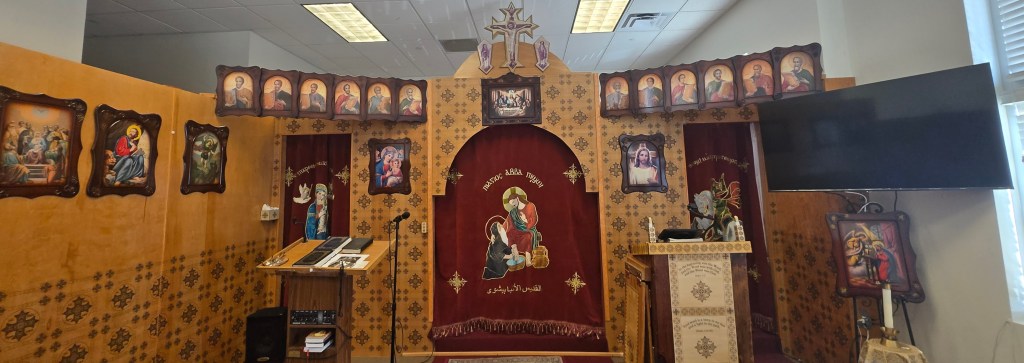
The icon of Saint Pishoy often depicts him washing the feet of a stranger, reflecting his practice of serving visitors with humility and love.
In this tradition, Christ appears to him in the form of a traveler, similar to how God appeared to Abraham in the Scriptures. Saint Pishoy serves Him faithfully, unaware of His identity until he notices the marks of the Crucifixion. This moment highlights his humility and the belief that Christ is encountered in every act of service and hospitality.
His Life and Legacy
Saint Pishoy was born around the early fourth century in Egypt’s Nile Delta and grew up in a devout Christian family. After the passing of his father, his mother raised him and his siblings in the faith. A vision later confirmed that he was chosen for a life dedicated to God.
At a young age, he left his home and entered monastic life in the desert region of Scetis. There, he trained under experienced spiritual fathers and grew in prayer, obedience, and ascetic practice. Over time, he became a spiritual guide to many monks living nearby.
His life was centered on prayer, Scripture, fasting, and service. He was known for his humility, often choosing the lowest place and living with great simplicity. Despite his quiet nature, many sought his counsel because of his wisdom and spiritual insight.
Saint Pishoy is also remembered for his defense of the Orthodox faith. When confronted with teachings that denied the Holy Spirit, he used a simple physical example involving a three-part object to illustrate the unity of God as Father, Son, and Holy Spirit, helping others return to correct belief.
Tradition also records his close spiritual friendships with other saints and his gift of discernment, as well as moments where he was granted special understanding or assistance by God for the sake of his ministry.
In his later years, he lived in Upper Egypt and continued his ascetic life. After his passing, his body was honored and later transferred to the Monastery of Saint Pishoy in Wadi El-Natroun, where it remains a place of pilgrimage.
Today, Saint Pishoy is honored throughout the Coptic Orthodox Church as an example of humility, hospitality, and deep love for Christ, inspiring believers to serve others with purity of heart.